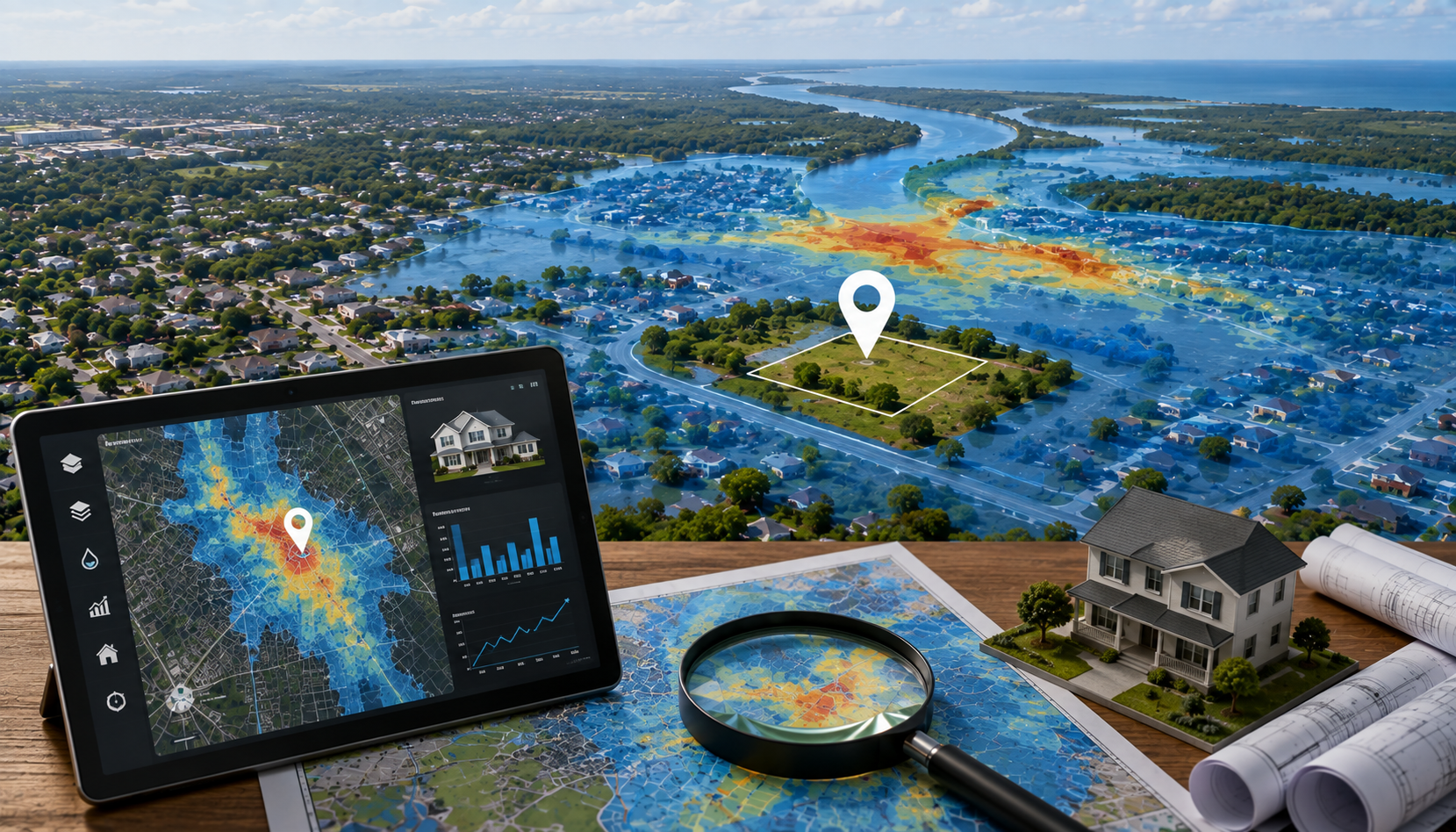
Why Flood Risk Deserves Attention
Flood exposure is an important part of property due diligence. It can influence construction requirements, insurance availability, financing, maintenance costs, and long-term usability.
Start With Official Flood Information
In the United States, investors can review available flood hazard information and local government resources. Maps should be treated as one source of information rather than a complete assessment of future flood conditions.
Look Beyond the Parcel Boundary
Nearby rivers, drainage channels, low-lying terrain, coastal exposure, stormwater infrastructure, and surrounding development can all provide useful context.
Investigate Drainage
A parcel that is not identified within a major flood hazard area can still experience drainage problems. Local topography and stormwater systems should be considered.
Consider Development Requirements
Flood-related regulations may influence building elevation, drainage design, setbacks, permits, and construction costs.
Insurance and Financing
Depending on the property and financing arrangement, flood insurance requirements or costs may affect the economics of an investment.
Use Multiple Sources
Combine preliminary digital research with official records, local authorities, insurance professionals, surveyors, engineers, and other qualified specialists when flood exposure could materially affect the investment.