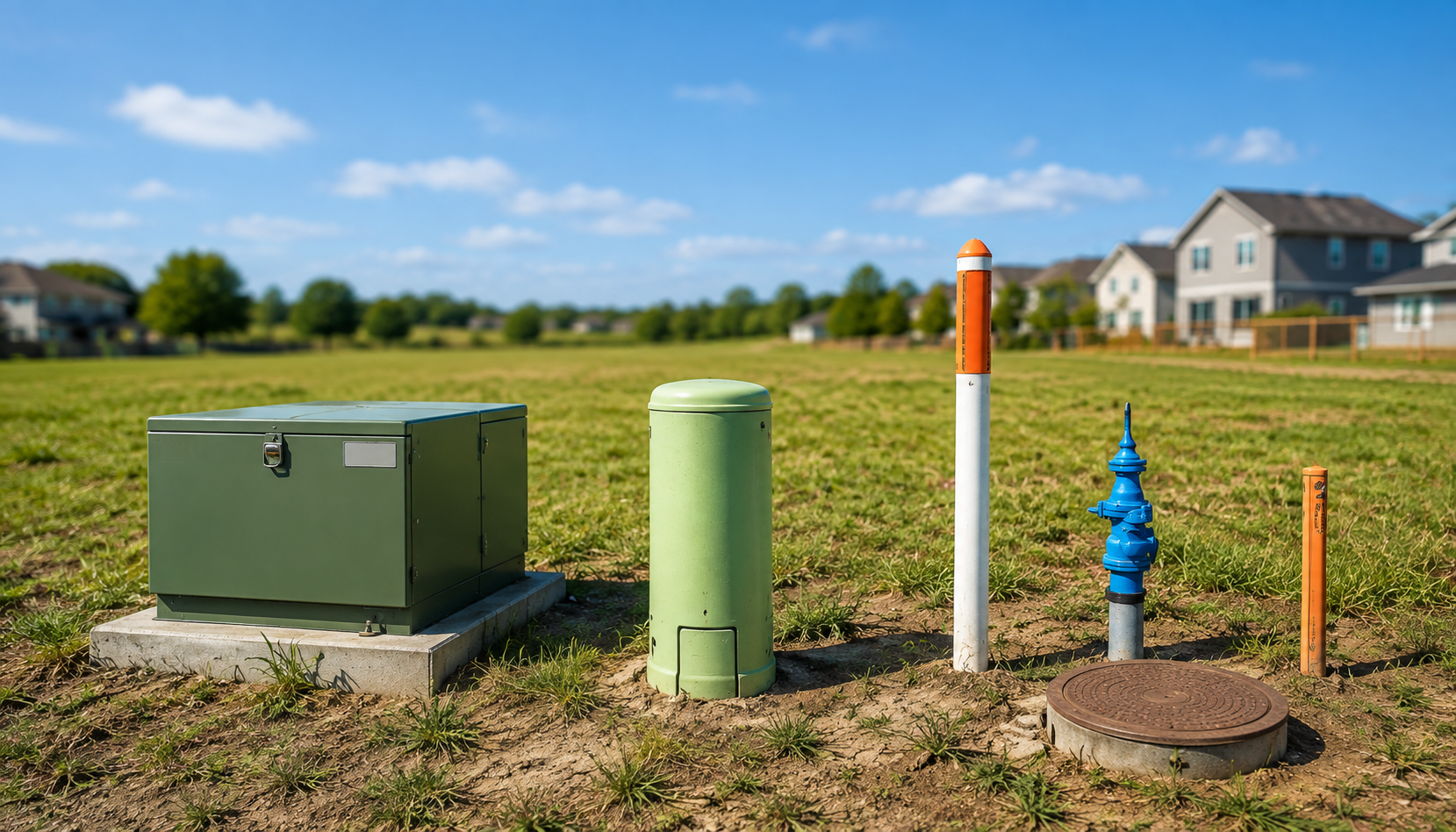
Utilities Can Change the Economics of Land
A low purchase price does not necessarily mean inexpensive development. Extending utilities or creating independent systems can add significant costs.
Electricity
Determine how close electrical service is to the parcel and whether additional poles, transformers, easements, or line extensions may be required.
Water
Check whether public water is available. Where a well is required, investigate local rules, groundwater conditions, drilling feasibility, and testing requirements.
Sewer and Septic
If public sewer is unavailable, determine whether the parcel may support an approved septic system. Soil, lot size, setbacks, and local regulations can affect feasibility.
Natural Gas
Gas availability varies significantly by location. Alternative energy sources may be necessary where service is unavailable.
Internet and Telecommunications
Reliable internet access has become increasingly important for residential users and many businesses. Rural locations may have fewer options.
Ask About Connection Costs
Availability nearby does not necessarily mean connection is inexpensive or guaranteed. Contact relevant utility providers and local authorities for current requirements and estimates.
Include Utilities in Your Investment Budget
Before buying land for development, estimate utility-related costs alongside acquisition, site work, permits, construction, financing, and holding costs.